
On November 10, 2026, OpenAI launched Businesses in ChatGPT in beta: a Business Hub where companies claim a verified profile, plus Business Agents that answer customer questions, limited for now to eligible US ecommerce and online-service businesses (TechCrunch). It’s free in the beta, it counts clicks rather than sales, and it won’t capture or follow up a lead for you. Claim your profile, fix your facts, and get your post-click path ready this week.
Picture a Tuesday at 9:40 p.m. Someone types “who can fix a leaking water heater tomorrow?” or “best bookkeeper for a two-person shop” into ChatGPT. For the past couple of years, whether your name came back was largely out of your hands.
On November 10, OpenAI gave businesses a door into that conversation. This guide is for owners of small and mid-sized businesses in the US and Canada. It covers what launched, who qualifies today, what the dashboard can and can’t tell you, and a five-step plan for this week. One caution up front: OpenAI’s own announcement page refused our fetch, so we built this from TechCrunch and trade coverage, and we flag where those sources disagree. Confirm the details on OpenAI’s help pages before you act.

What Did OpenAI Actually Launch on November 10?
In 2026, OpenAI launched Businesses in ChatGPT in beta, built from two pieces. The Business Hub lets companies create business profiles that, per TechCrunch, “greatly resemble” Google’s business profile product, with a way to verify and update information about products and services. Business Agents let eligible companies build and launch a specialized agent that users can question about the business (TechCrunch, Lucas Ropek, November 10, 2026).
The hub also includes limited insights, which TechCrunch compares to Google Analytics: how many people viewed the profile, how often ChatGPT mentioned the business, and how many clicked through to the website. OpenAI itself called the launch “an early step in bringing businesses more deeply into ChatGPT,” so expect the feature set to change.
The reach is the pitch. Forbes framed the launch as a way to connect with 1.2 billion prospective customers (Forbes, November 13, 2026, headline figure; we couldn’t open the article). Treat that as the size of ChatGPT’s audience, not the number of people who will find you.
It didn’t come from nowhere. Here’s the short path that led to it:
| When | What happened | Why it matters |
|---|---|---|
| March 2026 | OpenAI retired its earlier ecommerce push, which used a commission model and a “checkout cart” feature (TechCrunch) | A previous attempt at commerce in ChatGPT didn’t take off |
| September 16, 2026 | OpenAI began testing Sponsored Agents, where an ad opens a chat with a business’s agent, with select US advertisers (PYMNTS) | The paid version of the same idea |
| November 10, 2026 | Businesses in ChatGPT launched in beta, with free profiles and agents | The organic, claim-it-yourself version |
TechCrunch’s read on that first row is worth keeping in mind: whether this initiative does better “remains to be seen.” That’s why our advice below is to claim and prepare, not to rebuild your business around it. For the wider question of how AI tools choose who to recommend, see our guide to getting found in AI search.
Who Can Use It Today, and Who Can’t?
Profiles are broadly open; agents are narrow. Third-party guides report that eligible businesses with a website can claim a profile in places where ChatGPT is available, while Business Agents are limited to “eligible e-commerce and online-service businesses in the United States” after an OpenAI review that looks at the business category and intended use (Cogny, updated November 11, 2026). Verification alone doesn’t qualify you for an agent.
| Your business | Claim a profile and see insights | Build a Business Agent |
|---|---|---|
| US ecommerce or online-service business | Yes, if eligible and verified | Possible after OpenAI review |
| US local business (shop, clinic, trades) | Yes | Not yet; no date given (Data Studios) |
| Canada and other markets | Reported yes, with a website | Not yet; no timeline published |
That table comes from secondary sources, and they don’t fully agree. On verification, Benji Shomair, OpenAI’s VP of Monetization, told journalists there are “multiple verification methods” for different business types and markets (TechCrunch). Cogny saw a DNS record check. Another write-up describes a call or text to your main business number, and government ID for editing or publishing an agent (Beri, November 14, 2026). Until OpenAI publishes the rules, sort out two things now: who controls your domain’s DNS, and which phone number is on your website.
What Can a Business Agent Actually Do?
It answers questions, and in the coverage we read, that’s about all. Cogny describes an agent people can chat with about your products or services that answers “from the information you control,” and other write-ups say you supply instructions, context documents, and a product feed. Does it book a job, take a payment, or collect a lead? Nobody we read says so. One guide says that when a shopper is ready, the agent sends them to the brand’s own website to finish the purchase (Data Studios).
- Can do: Answer product and service questions from the material you provide, in a chat labeled as an AI agent.
- Not described: Lead capture, handoff to a human, payment, or follow-up after the chat ends.
- Bookings: One summary says bookings would need explicit authorization through an approved feature. That’s a future door, not a launch feature (Unite.AI).
- Rules and risk: The same summary says agents must disclose they’re AI, shouldn’t give licensed professional advice, and can be suspended by OpenAI. It also says OpenAI doesn’t verify every detail a business supplies.
A Business Agent is a front desk with no back office. It can greet the customer and answer the question. Everything after that, the follow-up, the quote, the booking, still has to live on your side.
That gap is where most of the value will be won or lost, and we’ll come back to it. First, the dashboard.
What Does the Business Hub Measure, and What Does It Miss?
It measures attention, not revenue. As reported, Business Hub insights show mentions, profile views, website clicks, and discovery topics over the last 7 or 28 days, compared with the prior period, and they appear only after enough conversations cross a minimum threshold (Cogny). Several write-ups stress the click count is “not purchases.” It doesn’t show user prompts, conversations, agent chats, competitor comparisons, or your rank.
How small can the numbers be? Cogny, an AI-visibility vendor that claimed its own profile, reported 108 mentions and zero website clicks in its first seven days, and noted its topics panel added up to 47 mentions while the headline tile said 108. That’s one site’s first week, so don’t read it as a benchmark. It does show that early data can be thin and may not reconcile.
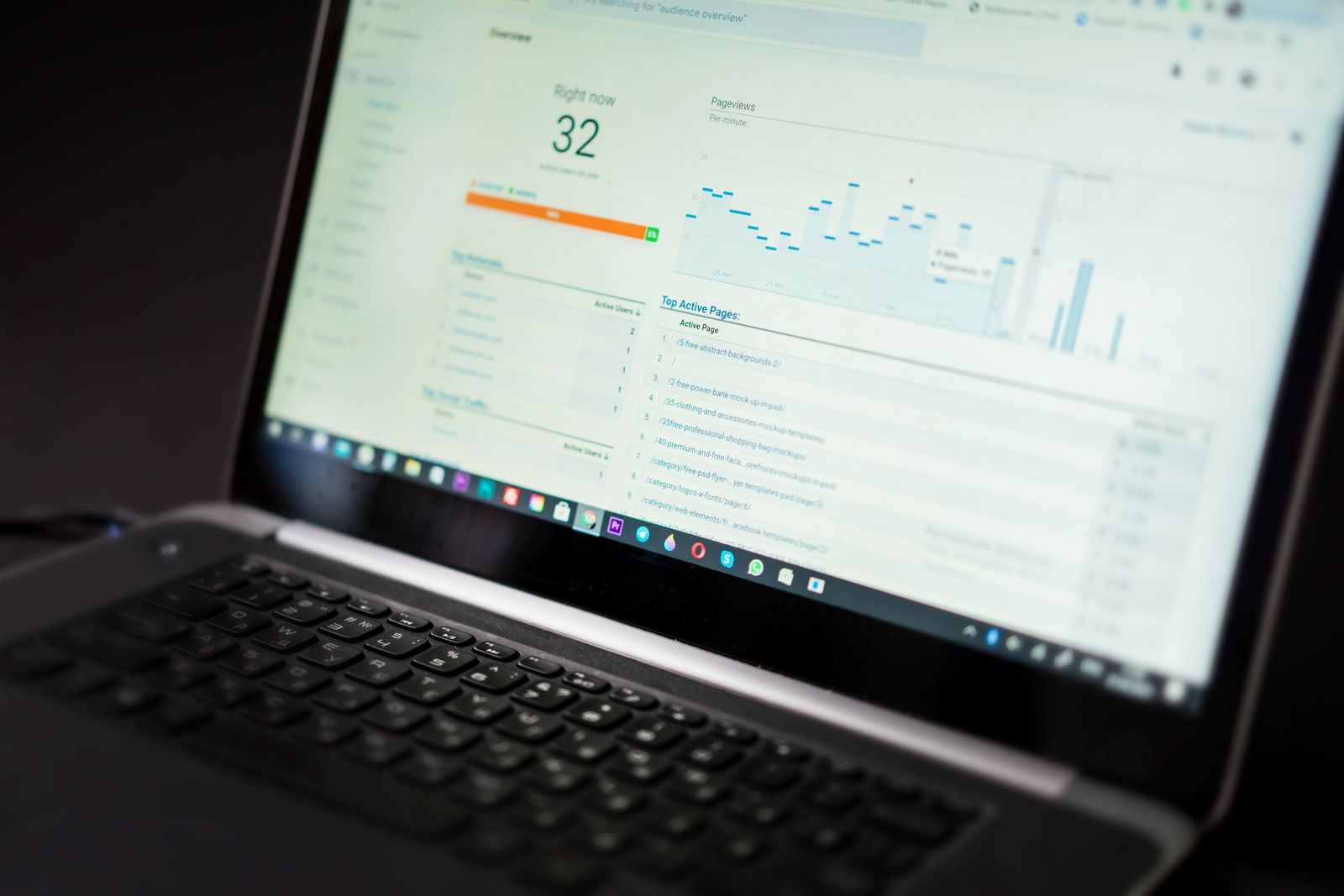
Here’s how we’d read it. The hub gives you a top-of-funnel number, so pair it with your own bottom-of-funnel numbers. Each week, put the hub’s website clicks beside the new leads in your CRM tagged to a ChatGPT referral. If clicks rise and leads don’t, the problem sits on your side of the click. Our AI proof file shows how to keep that record.
Why Should You Care Before You’re Even Eligible?
Because customers are already asking. In SOCi’s 2026 Local Discovery Index, a survey of more than 1,000 US consumers published in September 2026, 52% had used an AI tool to find a local business in the prior 30 days, up from 9% in the 2025 edition, and ChatGPT was the tool 57% of those seeking AI tools used (SOCi, September 24, 2026). SOCi sells local-marketing software, and it renamed the study between editions, so read it as direction, not precision.
Surveys disagree on the size of the shift because they ask different questions. Our earlier post cites BrightLocal’s 45% for consumers who had used AI to find a local business, a different question and sample. The common thread is steep growth, which is why a verified profile is worth an hour of your time even if you never build an agent.
The second finding matters more. SOCi found 81% of consumers take a verification step before contacting a business after an AI recommendation, and only 19% go straight from the AI answer to the business (SOCi, 2026).
Reviews lead the verification list. That means the profile is only half of the job: what customers find when they double-check you decides whether the click turns into a call. Our guide to GoHighLevel’s Reviews AI covers the review side. And remember what coverage says about the profile itself: claiming doesn’t change how you’re ranked (Beri, 2026). It’s a verified fact sheet, not a shortcut.
What Happens After Someone Clicks Through From ChatGPT?
That’s the question the dashboard can’t answer, and it’s where small businesses quietly lose the lead. With 81% checking you out first, the person who lands on your site is already comparing you with two other tabs. If the form goes to an inbox nobody reads until Monday, or the phone rings out at 9:40 p.m., the profile did its job and your business didn’t.

This is the layer we build. Nothing in the launch coverage mentions a GoHighLevel integration, so assume the handoff is an ordinary website click and design for that. On the platform you already use, the post-click path looks like this:
- Capture: A short form or booking link on a page written for people who just asked an AI about you, with source tagging so the CRM records where each lead came from.
- Respond: An instant text or email, plus a voice or chat agent for after-hours calls. Our guide to AI voice agents for missed calls covers the phone side.
- Route: Hot leads to a human, routine questions to automation, everything logged. See the five GoHighLevel automations to turn on first.
None of this competes with a Business Agent. OpenAI’s agent handles the conversation inside ChatGPT; your system handles the lead once it reaches you. AI-fy Your Business Processes builds that second half on top of the CRM, calendar, and website you already have, so nothing about your day-to-day changes while it goes live.
What Should You Do This Week? The Front Door Checklist
Five steps, in order, about two to three hours in total. We call it the Front Door Checklist: our own framework, built from the launch details above, not survey data.
| Step | What to do | Done means |
|---|---|---|
| 1. Claim | Check eligibility and claim your profile in the Business Hub. Know who controls your DNS and which business phone is public. | Profile claimed, or a dated note of what blocked you |
| 2. Correct | Make hours, services, prices, service area, and policies identical across your website, Google profile, and social pages. | One page of facts you’d be happy for any AI to quote |
| 3. Capture | Build a landing path and lead source tag for ChatGPT visitors. Watch for chatgpt.com in your analytics referrals. | A test visit shows up in your CRM with its source |
| 4. Convert | Set an instant reply and an after-hours route for calls and forms. | Test lead gets a response in minutes, at any hour |
| 5. Check | Every Friday, compare hub clicks with CRM leads from ChatGPT. Use the 28-day window for trends. | A one-line weekly note in your proof file |
If you only have an hour, do steps 2 and 4. Our read, from the survey pattern above rather than a study of our own, is that an AI-referred lead is more likely to be lost to a slow reply or to facts that don’t match across the web than to a missing profile. Both are fixable without waiting for OpenAI to expand anything.
Should You Build a Business Agent If You Qualify?
Pilot one if your pre-sale questions repeat. The agent is free during the beta, OpenAI hasn’t ruled out charging later, and it can be suspended, so treat it as a test, not infrastructure (Cogny, citing Digiday for the pricing point). Three checks help you decide.
- Are the answers stable? Shipping times, sizing, return rules, and service areas suit an agent. Prices that change daily or advice that needs a license don’t.
- Do you have one source of truth? If your website, your GoHighLevel chat, and the ChatGPT agent give three different answers, you’ve created a trust problem, not a feature. Write the facts once and feed all three.
- Is the post-chat path ready? If not, finish steps 3 and 4 first. An agent that creates interest you can’t catch is a leak, not a channel.
If you ever sponsor your agent, that path is a separate, paid decision. OpenAI’s September 16 test named HubSpot as its first CRM partner and Shopify as its first ecommerce partner (PYMNTS, 2026), and it was limited to select US advertisers. Measure it the way you’d measure any ad, with cost per booked job, not clicks. Our post on orchestrating agents into workflows explains why one agent in one channel is rarely the whole answer.
What Is the Smartest Next Move?
Claim, correct, and catch. Spend one hour on your facts, one on your reply speed, and put a date on your calendar to read the hub numbers against your CRM. You don’t need to know how OpenAI’s roadmap unfolds to get that value.
If you’d rather not build the post-click side alone, AI Strategy Consulting maps where AI-referred visitors enter your business and what should happen in the first five minutes. When you’re ready, Book Your Free AI Audit and we’ll walk through your own front door in one conversation.
Frequently Asked Questions
What is Businesses in ChatGPT?
Businesses in ChatGPT is a beta feature OpenAI launched on November 10, 2026. It has two parts: a Business Hub, where a company claims a verified profile and sees limited engagement insights, and Business Agents, which let eligible businesses offer a chat that answers questions about their products or services. Agents are limited to eligible US ecommerce and online-service businesses at launch.
Is the ChatGPT Business Hub free?
It’s free during the beta, according to coverage of the launch, but OpenAI hasn’t said it will stay free. Reporting cited by third-party guides says OpenAI has not ruled out a paid model later. Sponsoring a Business Agent as the destination for a ChatGPT ad is a separate, paid option that was in a US-only test from September 16, 2026.
Can Canadian small businesses claim a profile in ChatGPT?
Probably the profile, but not the agent. Third-party guides report that eligible businesses with a website can claim a profile in any market where ChatGPT is available, while Business Agents are US-only for now. OpenAI hasn’t published exact verification criteria or an agent timeline for other markets, so check OpenAI’s own help pages before you start.
Does claiming my business in ChatGPT help me rank higher?
Not directly. Coverage of the launch reports that OpenAI says claiming a profile does not change how a business is ranked. The profile gives you a verified place to correct your facts and see aggregated mentions, views, and website clicks. Showing up in answers still depends on the reputation, reviews, and website content that AI tools read.
Will I see the conversations customers have with my Business Agent?
No. Every account of the launch we read says businesses don’t receive ChatGPT conversations or Business Agent chats. You get aggregated insights: mentions, profile views, website clicks, and discovery topics, over 7 or 28 days. Low-volume counts are withheld until enough conversations cross an unpublished threshold, so small businesses may see empty dashboards at first.
Sources
- TechCrunch, Lucas Ropek, OpenAI rolls out new business profiles, making ChatGPT just a little bit more like Google (Business Hub, profiles, business agents, insights, verification quote from OpenAI’s VP of Monetization, March 2026 retirement of the earlier checkout feature), November 10, 2026, retrieved 2026-11-17, https://techcrunch.com/2026/11/10/openai-rolls-out-new-business-profiles-making-chatgpt-just-a-little-bit-more-like-google/
- OpenAI, Introducing Businesses in ChatGPT (primary announcement; our fetch returned an access error, so we did not read it and relied on press and trade coverage; confirm details on OpenAI’s pages), retrieval attempted 2026-11-17, https://openai.com/index/introducing-businesses-chatgpt/
- Cogny, Berner Setterwall, ChatGPT Business Hub Is Live: Claim Your Business in ChatGPT (2026) (vendor post by an AI-visibility company; eligibility, DNS verification route, insights metrics, free in beta; first-week figures come from Cogny’s own single account), updated November 11, 2026, retrieved 2026-11-17, https://cogny.com/blog/chatgpt-business-hub-claim-your-business
- Beri, Rajesh Beri, OpenAI’s Business Hub Counts Clicks, Not ChatGPT Purchases (secondary analysis citing Digiday, PPC Land, and others; verification routes; ranking statement; free for now), November 14, 2026, retrieved 2026-11-17, https://www.beri.net/article/openai-businesses-in-chatgpt-business-hub-business-agents-beta-us-ecommerce-free-profile-sponsored-agents-chatgpt-ads-insights-no-transcripts
- Data Studios, ChatGPT Business Hub: free business agents for US brands, profiles and Insights (secondary guide; no byline or exact date shown; agent eligibility, purchase handoff to the brand’s site), published about a week after launch, retrieved 2026-11-17, https://www.datastudios.org/post/chatgpt-business-hub-free-business-agents-us-brands
- Unite.AI, OpenAI Launches Business Hub and Business Agents in ChatGPT (byline describes an AI-generated research agent with editorial review; agent rules, bookings, expansion intent; verify in OpenAI’s policies), November 10, 2026, retrieved 2026-11-17, https://www.unite.ai/openai-launches-business-hub-and-business-agents-in-chatgpt/
- Forbes, Lance Eliot, OpenAI’s Newest Feature Enables Business Owners To Set Up Shop In ChatGPT And Connect With 1.2 Billion Prospective Customers (only the headline figure is cited; the article itself returned an access error), November 13, 2026, retrieved 2026-11-17, https://www.forbes.com/sites/lanceeliot/2026/11/13/openais-newest-feature-enables-business-owners-to-set-up-shop-in-chatgpt-and-connect-with-12-billion-prospective-customers/
- PYMNTS, OpenAI Tests Sponsored AI Agents in ChatGPT Ads (September 16, 2026 test with select US advertisers; HubSpot and Shopify as first partners; read via search summary, not the full page), September 2026, retrieved 2026-11-17, https://www.pymnts.com/news/artificial-intelligence/2026/openai-tests-sponsored-ai-agents-in-chatgpt-ads/
- SOCi, Kaci McBride, AI Usage Surges 6X for Local Search, Fragmenting the Digital Ecosystem (2026 Local Discovery Index; more than 1,000 US consumers; vendor survey; 2025 figure from a prior edition under a different name; fieldwork dates and margin of error not stated), September 24, 2026, retrieved 2026-11-17, https://www.soci.ai/blog/ai-local-search-verification-loop/
- Aifyze, the Front Door Checklist (Claim, Correct, Capture, Convert, Check) and the weekly hub-versus-CRM comparison: original framework built from the sources above. Not survey data. Details of a beta product can change quickly; confirm eligibility and terms with OpenAI before acting.